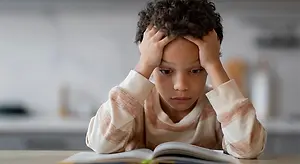
If it seems like more children wear glasses today than when you were growing up, you are not imagining the change. Childhood myopia, commonly called nearsightedness, is becoming increasingly common, leaving many parents concerned about stronger prescriptions, screen use, and their child’s long-term eye health.
Myopia usually causes distant objects to appear blurry while close-up vision remains clear. Although genetics can strongly influence whether a child develops myopia, lifestyle and environmental factors may also contribute to its development and progression.
What Causes Childhood Myopia to Get Worse?
Myopia often progresses as a child’s eyes grow. In many cases, the eye becomes longer from front to back, causing incoming light to focus in front of the retina rather than directly on it. This creates blurred distance vision and may lead to stronger prescriptions over time.
Children with one or two nearsighted parents may have a greater likelihood of developing myopia. Extended near work, frequent use of phones or tablets, and limited outdoor time have also been associated with childhood nearsightedness.
Screens are not necessarily the sole cause of a child’s worsening vision. However, long periods of uninterrupted close work may contribute to visual fatigue and leave less time for outdoor activities that support healthy visual development.
What Are the Signs That a Child Is Struggling to See?
Children do not always recognize blurry vision because they may assume everyone sees the same way. Some compensate by moving closer to objects, squinting, or avoiding activities that feel visually demanding.
Parents and teachers should watch for signs such as:
- Squinting when looking across a classroom or playing sports
- Sitting close to the television
- Holding books, homework, or devices close to the face
- Rubbing the eyes or blinking frequently during close work
- Tilting the head or covering one eye
- Experiencing headaches or irritability after school
- Losing interest in reading or other visually demanding activities
- Having difficulty seeing classroom displays or distant targets
- Requiring a stronger glasses prescription each year
These behaviors do not always mean a child has myopia, but they are good reasons to arrange a comprehensive pediatric eye exam.
How Do Pediatric Eye Exams Help?
A comprehensive eye exam evaluates more than whether a child can read letters on a chart. The optometrist can assess distance and near vision, prescription needs, eye movement, coordination, focusing, and internal eye health.
Exams can also be adapted to the child’s age and developmental stage. At the Lithonia office, children can receive eye care beginning in infancy, while the Marietta office welcomes children age five and older. Children do not need to know their letters or provide adult-style responses for the doctor to gather useful information about their vision.
Back-to-school exams are especially valuable because classroom learning requires children to shift their focus repeatedly between books, digital devices, written work, and distant displays. Identifying a vision concern early can help parents understand whether glasses, monitoring, or additional care may be appropriate.
Do Standard Glasses Slow Myopia Progression?
Standard single-vision glasses correct the blurred distance vision caused by myopia, helping children see the classroom board, recognize faces, and participate more comfortably in sports. They remain an important form of vision correction.
However, conventional single-vision lenses generally do not address the underlying eye growth associated with progressive myopia. If a child’s prescription continues to become stronger, the optometrist may discuss proactive myopia management.
What Is Myopia Management?
Myopia management uses specialized treatments and regular monitoring to help slow the progression of childhood nearsightedness. It does not cure myopia or permanently eliminate the need for vision correction.
Slowing progression may help keep a child’s eventual prescription lower than it otherwise might have been. This matters because higher levels of myopia are associated with an increased lifetime risk of retinal detachment, glaucoma, cataracts, and myopic macular changes.
The most suitable approach depends on factors such as:
- The child’s age and maturity
- Their current prescription
- How quickly the prescription is changing
- Family history of myopia
- Eye health and lifestyle
- The child’s ability to follow a treatment routine
Follow-up visits allow the optometrist to monitor changes and adjust the plan when necessary.
Which Myopia Treatment Does the Practice Provide?
At Lithonia Family Eyecare, atropine therapy is available for children with progressive myopia. This treatment uses prescribed eye drops, typically administered once daily at bedtime, to help slow the progression of nearsightedness.
Dr. Andre Lenoir evaluates each child individually and explains how to use the drops, what parents should expect, and how treatment will be monitored. Children using atropine may still need glasses or contact lenses to see clearly.
If another form of myopia management, such as Ortho-K overnight lenses or MiSight® soft contact lenses, may be more appropriate, the practice can coordinate a referral to a qualified local provider. This approach helps families access care suited to the child’s individual needs without suggesting that every child requires the same treatment.
Can Healthy Habits Support a Child’s Vision?
Healthy visual habits cannot cure existing myopia, but they can reduce visual fatigue and support overall eye health. Families can encourage children to take regular breaks during homework and device use, keep screens at a comfortable distance, and avoid working in dim lighting.
Children should also have opportunities to spend time outdoors when appropriate. Parents can help by balancing recreational screen use with outdoor play, sports, and other distance-viewing activities.
When Should My Child Have an Eye Exam?
Comprehensive eye assessments can begin during infancy. The American Optometric Association recommends an initial assessment between 6 and 12 months, another comprehensive examination between ages 3 and 5, and annual exams for school-age children unless the optometrist recommends a different schedule.
Children should be examined sooner if parents notice squinting, headaches, an eye turn, difficulty with reading or schoolwork, or rapidly changing vision. A school screening can identify certain concerns, but it does not replace the detailed evaluation provided during a comprehensive eye exam.
Schedule a Pediatric Eye Exam in Stonecrest
When a child’s prescription keeps changing, waiting for the next pair of stronger glasses may not be the only option. A comprehensive evaluation can determine whether the change represents progressive myopia and whether treatment or closer monitoring should be considered.
Lithonia Family Eyecare provides pediatric eye exams and individualized myopia care for families in Stonecrest, Marietta, and surrounding Metro Atlanta communities. Schedule an appointment to give your family clear information and a practical plan for supporting your child’s vision.
Frequently Asked Questions
At what age should a child have their first eye exam?
A child’s first comprehensive eye assessment can take place between 6 and 12 months of age. Another examination is recommended between ages 3 and 5, followed by annual exams during the school years or as directed by the optometrist.
Can children use myopia eye drops successfully?
Yes, many children can follow an atropine drop routine with help from a parent or caregiver. The optometrist provides instructions and monitors the child’s response during follow-up visits.
Can children wear specialized contact lenses for myopia?
Some children are good candidates for specialized contact lenses, depending on their age, maturity, prescription, eye health, and hygiene habits. If this option may be appropriate, the practice can coordinate a referral to a qualified provider.
What is the main benefit of starting myopia management early?
Starting early provides an opportunity to slow myopia while the eyes are still developing. Treatment cannot cure nearsightedness, but it may help reduce the amount of progression a child experiences.
Does screen time permanently damage a child’s eyes?
Screen use alone does not fully explain childhood myopia. Genetics, near-work demands, outdoor time, and eye growth may all contribute, although extended screen use can cause visual fatigue and reduce time spent outdoors.